 Islamabad Lawyers & Attorneys
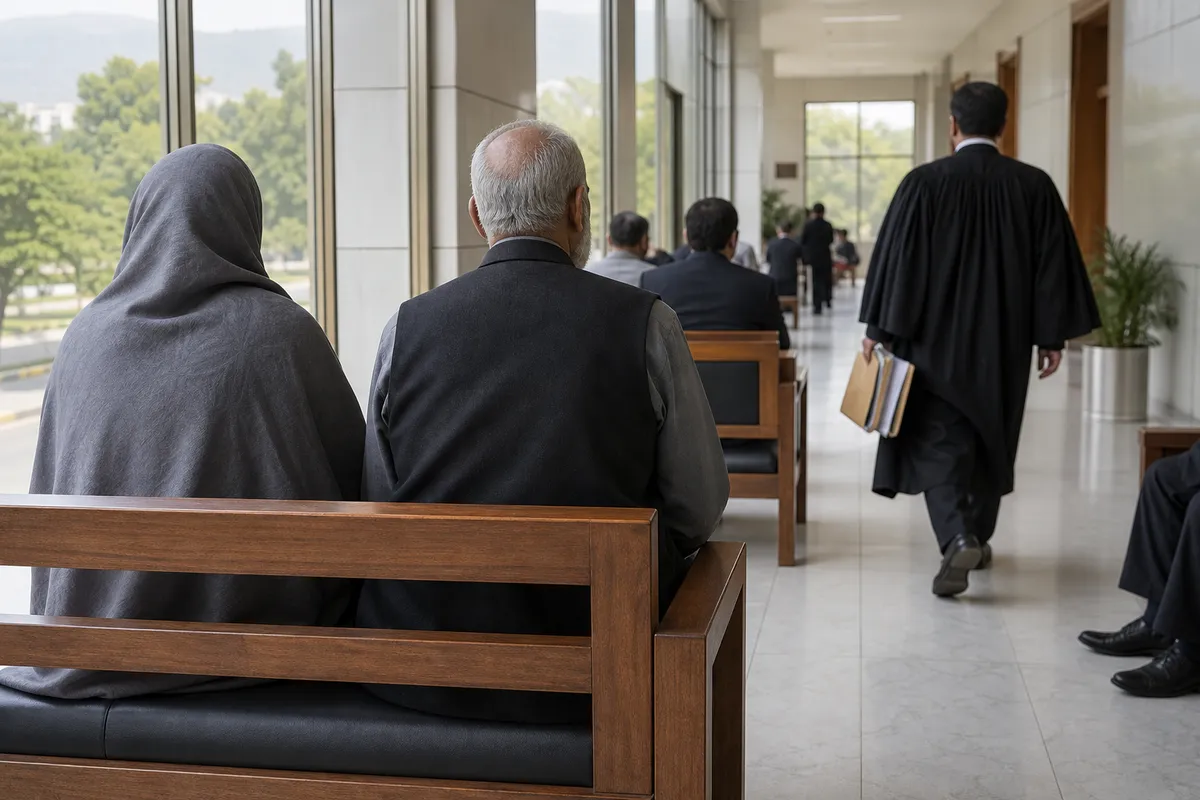
Family Lawyers in Islamabad: How We Help
Our Family Lawyers in Islamabad assist with:
- Divorce and Talaq proceedings
- Khula and dissolution of marriage
- Child custody and guardianship
- Visitation and meeting rights
- Wife and child maintenance
- Recovery of Haq Mehr
- Dowry articles and personal belongings
- Family settlements and reconciliation
- Divorce registration and certificates
- Domestic violence protection
- Representation of overseas Pakistanis
- Enforcement of Family Court decrees
Every case is reviewed according to its facts, documents, applicable personal law and the welfare of any children involved. Islamabad Office: Laraib Plaza, Karachi Company, G-9 Markaz, Islamabad. Call or WhatsApp: +92 333 1127836.
Consult a Family Lawyer in Islamabad
Contact our Family Lawyers in Islamabad when you need assistance with:
| Family-law matter | Legal assistance |
|---|---|
| Khula | Drafting, filing and Family Court representation |
| Talaq | Talaq Nama, Union Council notice and registration |
| Child custody | Custody petitions, interim custody and court representation |
| Guardianship | Guardianship certificate and authority concerning a minor |
| Visitation | Meeting schedules and enforcement of parental access |
| Maintenance | Wife or child maintenance claims and recovery |
| Haq Mehr | Recovery or defence concerning unpaid dower |
| Dowry articles | Recovery of dowry, bridal gifts or personal belongings |
| Family settlement | Negotiation and legally documented settlement |
| Overseas cases | Power of attorney and representation from abroad |
| Domestic violence | Advice on protection and other available remedies |
| Decree execution | Enforcement of maintenance and other Family Court orders |
Family Law in Islamabad: What Family Lawyers in Islamabad Apply
Family Lawyers in Islamabad work within a framework of statutory law, applicable personal law and judicial principles. Important laws include:
| Law | Principal subject |
|---|---|
| Family Courts Act, 1964 | Family Court jurisdiction and procedure |
| Muslim Family Laws Ordinance, 1961 | Talaq notice, reconciliation and specified matrimonial matters |
| Dissolution of Muslim Marriages Act, 1939 | Judicial dissolution on legally recognised grounds |
| Guardians and Wards Act, 1890 | Guardianship and custody of minors |
| Islamabad Capital Territory Child Marriage Restraint Act, 2025 | Minimum marriage age in Islamabad |
| Domestic Violence (Prevention and Protection) Act, 2026 | Protection and relief concerning domestic violence in ICT |
| Applicable non-Muslim personal laws | Marriage and divorce involving non-Muslim citizens |
Family Courts deal with specified matrimonial and family disputes. Guardianship and custody proceedings are determined under the relevant family and guardianship framework, with the welfare of the minor remaining the central consideration.
Divorce and Talaq: Family Lawyers in Islamabad
A Muslim husband may pronounce Talaq, but pronouncement alone should not be treated as completion of the statutory procedure.
Under the Muslim Family Laws Ordinance, written notice must be delivered to the Chairman of the relevant Union or Arbitration Council, and a copy must be supplied to the wife. The relevant authority initiates reconciliation proceedings.
Subject to the applicable legal circumstances, Talaq ordinarily becomes effective after the statutory period of ninety days calculated from delivery of the notice to the Chairman. Where the wife is pregnant, the period extends until the end of the pregnancy if that is later.
Talaq Services from Our Divorce Lawyers
- Drafting a legally accurate Talaq Nama
- Determining the competent Union or Arbitration Council
- Submission of the statutory notice
- Service upon the wife
- Representation during reconciliation proceedings
- Correction of defective divorce records
- Obtaining the final divorce registration certificate
- Overseas Talaq documentation
- Advice concerning Haq Mehr and maintenance
- Advice concerning children after separation
Khula Lawyers in Islamabad
Khula is a judicial method through which a Muslim wife may seek dissolution of marriage when she is unable or unwilling to continue the marital relationship within the limits recognised by law. A husband's refusal to consent does not necessarily prevent the Family Court from granting Khula. For the full procedure, see our Khula Lawyers in Islamabad guide.
The Khula Procedure
- Preparation of the plaint
- Filing before the competent Family Court
- Service upon the husband
- Filing of written statement
- Reconciliation proceedings
- Recording of the wife's position
- Determination of connected financial issues
- Decree for dissolution
- Transmission or registration of the decree through the relevant authority
The treatment of Haq Mehr or benefits received by the wife depends on the nature of the claim, the pleadings, the Nikah Nama and the legal basis upon which dissolution is sought. Khula should not be described as requiring the husband's consent. It is also different from a dissolution claim based on cruelty, non-maintenance, disappearance, imprisonment or another statutory ground.
Khula and Dissolution of Marriage Are Not Always the Same
| Matter | Khula | Dissolution on legal grounds |
|---|---|---|
| Basic position | Wife states she cannot continue the marriage | Wife relies upon one or more recognised legal grounds |
| Husband's agreement | Not essential for a court decree | Not essential if the ground is proved |
| Evidence | Nature depends on the relief claimed | Evidence may be required to establish the pleaded grounds |
| Haq Mehr | Court determines the effect according to law and facts | Treatment may differ depending on the established ground |
| Court | Competent Family Court | Competent Family Court |
The plaint should be drafted according to the actual legal basis rather than using Khula and dissolution interchangeably.
Child Custody Lawyers in Islamabad
Child custody concerns the day-to-day care, residence and upbringing of a child. When parents separate, custody is not decided solely by the financial position of either parent. The court considers the welfare of the minor and may examine:

- Age of the child
- Existing caregiving arrangement
- Emotional attachment
- Education
- Health and medical needs
- Safety and stability
- Conduct of the parents
- Living environment
- Ability to provide daily care
- The child's preference where age and maturity justify considering it
- Willingness of each parent to facilitate a healthy relationship with the other parent
Neither the mother nor the father should assume that custody is automatic in every case. Principles concerning age and parental entitlement remain subject to the overriding welfare of the child. See our Child Custody Lawyers in Islamabad guide.
Our Child-Custody Services
- Custody petitions
- Interim custody applications
- Production of the minor
- Visitation applications
- Modification of meeting schedules
- Enforcement of custody orders
- Objections to removal of a child
- Recovery of a child wrongfully retained
- Custody representation for overseas parents
- Appeals and other appropriate proceedings
Guardianship Lawyers in Islamabad
Custody and guardianship are related but legally distinct.
| Custody | Guardianship |
|---|---|
| Concerns physical care and residence | Concerns legal authority over the minor or the minor's property |
| May be granted to a caregiving parent | May involve appointment or recognition of a legal guardian |
| Focuses on everyday upbringing | May be required for education, passport, travel, property or formal decision-making |
| Can involve interim arrangements | Usually requires formal guardianship proceedings |
When a Guardianship Certificate Is Needed
- Managing a minor's property
- School or educational decisions
- Passport-related matters
- International travel
- Immigration applications
- Medical decisions
- Banking or financial matters
- Succession or inherited property
- Representation of a minor before authorities
The required relief depends on the purpose for which legal authority is needed.
Visitation and Meeting Rights in Islamabad
A parent who does not have physical custody may seek reasonable visitation or meeting rights. A visitation order may provide for:
- Weekly or fortnightly meetings
- Meetings at a neutral location
- Meetings on court premises
- Weekend access
- School holidays
- Eid and other occasions
- Telephone or video communication
- Supervised meetings where necessary
- Travel and handover arrangements
The schedule should be practical for the child. Visitation proceedings should not be used merely to continue conflict between the parents. Where an existing order is being disobeyed, the affected parent may seek enforcement or modification through the appropriate court.
Wife and Child Maintenance Claims with Family Lawyers in Islamabad
Maintenance disputes commonly involve:
- Maintenance during marriage
- Interim maintenance during litigation
- Child maintenance
- Education expenses
- Medical expenses
- Previous unpaid maintenance
- Enhancement of maintenance
- Enforcement of a maintenance decree
How the Court Assesses Maintenance
The amount is not determined through a single fixed formula. The court may consider:
- Needs of the wife or children
- Age and educational level of the children
- Medical requirements
- Existing standard of living
- Income and financial capacity of the person liable
- Evidence of employment or business
- Property and financial circumstances
- Number of dependants
- Inflation and current living costs
- Previous orders or agreements
A parent's obligation concerning the child is distinct from the matrimonial dispute between the spouses. Concealing income or relying only on an informal claim of unemployment does not necessarily determine the matter. Available records and surrounding financial circumstances may be examined.
Haq Mehr and Dower Claims
Haq Mehr is a legal and contractual right arising from the marriage. The Nikah Nama should be reviewed to determine:

- Total amount or property settled as dower
- Prompt and deferred portions
- Whether any amount was paid
- Whether property was transferred
- Conditions recorded in the Nikah Nama
- Any admission or receipt
- Consequences of divorce, Khula or dissolution
- Limitation or enforcement issues
Haq Mehr should not be confused with dowry articles given to the bride by her family. A wife may seek recovery of unpaid dower, while the husband may contest the claim based on payment, relinquishment, adjustment or another legally sustainable defence.
Dowry Articles, Bridal Gifts and Personal Belongings
Disputes frequently arise concerning articles given to a bride before or during marriage. A claim may involve jewellery, furniture, clothing, household appliances, cash, bridal gifts, personal documents, personal belongings and articles mentioned in a dowry list.
Evidence for a Dowry Claim
- A contemporaneous dowry list
- Receipts
- Photographs or videos
- Wedding records
- Messages
- Admissions
- Witness statements
- Evidence of possession
The claimant should provide an accurate and defensible list rather than an exaggerated or generic inventory.
There Is No Automatic 50/50 Division of Matrimonial Property
Pakistani family law should not be described through the American concept of automatic equal distribution of all property acquired during marriage. Ownership ordinarily depends upon:
- Legal title
- Source of funds
- Gift or transfer
- Contractual arrangements
- Entries in the Nikah Nama
- Trust or beneficial ownership claims
- Available documentary and oral evidence
Family Court claims relating to Haq Mehr, dowry articles and a wife's personal property are different from a general claim that every asset belonging to either spouse must be divided equally. A separate civil, property or succession proceeding may be necessary where ownership of land, a house, business interest or another asset is disputed.
Restitution of Conjugal Rights
A spouse may institute proceedings for restitution of conjugal rights where the other spouse has withdrawn from the marital relationship without lawful justification. The court may consider:
- Circumstances of separation
- Alleged cruelty or misconduct
- Maintenance
- Safety concerns
- Existing matrimonial proceedings
- Conduct of both parties
- Possibility of reconciliation
A restitution case should not be filed mechanically. Its legal effect and relationship with any Khula, maintenance or domestic-violence proceedings should be assessed first.
Domestic Violence Protection: How Family Lawyers in Islamabad Help
The Domestic Violence (Prevention and Protection) Act, 2026 applies within Islamabad Capital Territory. A person facing domestic violence may require urgent advice concerning:
- Immediate safety
- Protection orders
- Residence-related relief
- Medical evidence
- Police complaints
- Preservation of messages, recordings and photographs
- Protection of children
- Maintenance
- Recovery of documents or belongings
- Coordination with pending Family Court proceedings
Where there is an immediate threat of physical harm, the affected person should contact the relevant emergency and law-enforcement authorities without waiting for an ordinary consultation.
Family Settlements and Mediation Through Family Lawyers in Islamabad
Not every family dispute requires prolonged litigation, and Family Lawyers in Islamabad should explore settlement where it is lawful and safe. Where lawful and safe, the parties may resolve matters through a written settlement concerning Khula or mutual separation, Haq Mehr, maintenance, child custody, visitation, education and medical expenses, dowry articles, return of personal belongings, and pending litigation.
A family settlement should be precise, enforceable and consistent with the rights of children. Informal verbal promises frequently lead to further disputes. Where proceedings are already pending, the settlement should be presented before the competent forum in the appropriate form.
Family-law Services for Overseas Pakistanis
An overseas Pakistani may require representation by Family Lawyers in Islamabad where:
- One spouse lives in Pakistan
- The marriage was registered in Pakistan
- Children are residing in Islamabad
- A Talaq notice must be processed
- A Khula case must be filed
- Maintenance is being claimed
- Custody or visitation is disputed
- A decree or certificate is needed for immigration
- The opposing party is avoiding service
- Documents need attestation or verification
Depending on the matter, representation may be arranged through a properly executed Special Power of Attorney. The document may require notarisation, attestation by the relevant Pakistani mission and further processing in Pakistan. Not every stage can automatically be completed without the client's participation; the lawyer should identify at the beginning whether evidence, personal appearance, video-link participation or an affidavit may be required.
Non-Muslim Family-law Matters
Family-law rights and procedures may differ according to the personal law applicable to the parties. Our Family Lawyers in Islamabad can review matters involving Christian marriage and divorce, Hindu marriage and matrimonial disputes, guardianship, child custody, maintenance, family settlements, and registration and documentary issues.
A Muslim-law procedure should not be applied automatically to a non-Muslim marriage. The parties' religion, marriage record, place of registration and applicable statute must be reviewed first.
Family Court Process for Family Lawyers in Islamabad
Although each matter differs, a contested family case generally involves the following stages.
1. Initial Consultation
The lawyer reviews the facts, objectives, risks, and any urgent issues involving safety, children, maintenance, or limitation.
2. Document Review
Relevant documents may include the CNIC, Nikah Nama, Marriage Registration Certificate, children's birth certificates or B-Forms, Talaq notice, court documents, maintenance records, school and medical expenses, dowry list, property or payment records, messages and correspondence, and previous orders or settlements.
3. Jurisdiction Assessment
The lawyer determines which Family Court, Guardian Court, Union Council or other authority has territorial and legal jurisdiction.
4. Drafting and Filing
The plaint, petition, written statement or application is prepared according to the relief required.
5. Service of the Opposing Party
Summons or notices are served in accordance with the applicable procedure. Overseas or deliberately evasive parties may require additional service steps.
6. Reconciliation and Interim Relief
The court may attempt reconciliation where required. Applications for interim maintenance, temporary custody, visitation or other urgent relief may also be considered.
7. Evidence and Arguments
Where the matter remains disputed, the parties produce documents, statements and other relevant evidence.
8. Judgment and Decree
The court decides the claims before it. A judgment in one matter may not automatically determine every connected dispute.
9. Execution or Appeal
A successful party may still need execution proceedings to recover money, articles or compliance with the decree. An aggrieved party may have an appellate or other remedy subject to the nature of the order and applicable limitation.
Documents to Bring to Family Lawyers in Islamabad
- CNIC or passport
- Nikah Nama
- Marriage Registration Certificate
- Talaq Nama or divorce notice
- Khula decree or previous court order
- Children's B-Forms
- School-fee records
- Medical bills
- Proof of income or employment
- Bank or payment records
- Dowry list and receipts
- Messages, emails or notices
- Any Power of Attorney
- Copies of pending court cases
- A brief chronological case history
Documents should not be altered, recreated or selectively edited.
Why Choose Our Family Lawyers in Islamabad?
As Family Lawyers in Islamabad, Islamabad Lawyers & Attorneys provides structured family-law representation focused on legal accuracy, confidentiality and realistic advice. Clients receive:
- Consultation from experienced lawyers
- Clear explanation of available remedies
- Review of the Nikah Nama and supporting evidence
- Accurate drafting of pleadings
- Family Court representation
- Assistance for overseas Pakistanis
- Coordination of court and Union Council procedures
- Child-focused custody strategy
- Negotiation where settlement is appropriate
- Litigation where court protection is required
- Regular case updates
- Confidential handling of personal information
We do not guarantee court outcomes. Our responsibility is to prepare the case properly, advise the client honestly and pursue the appropriate legal remedy.
About Our Senior Family Lawyer
Mohsin Ali Shah, M.A., LL.B., Senior Lawyer and Chairman of Qanoon Group Pakistan, supervises the family-law practice. He commenced legal practice in 1985 and has more than four decades of professional experience. His work includes family law, divorce and Khula matters, child custody, guardianship, property law, corporate law and taxation. He coordinates with family-law practitioners and litigation teams serving clients in Islamabad and other parts of Pakistan.
Speak to Family Lawyers in Islamabad
If you are considering Khula, have received a talaq notice, or need custody, maintenance, dower or dowry articles decided, take advice before you sign anything. WhatsApp your Nikah Nama and any notices or court papers to +92 333 1127836, or call between 10 am and 10 pm; WhatsApp is read 24 hours a day.
Meetings are private and by appointment at Laraib Plaza, G-9 Markaz, Islamabad. An advocate reads your file, explains the route that fits your facts, the stages and the risks, and confirms the professional fee in writing. Appeals and writ petitions before the Islamabad High Court are reviewed by Fiaz Ahmed Khakh, Advocate Supreme Court. We do not promise dates or outcomes.